

S1E13 In the Flesh
In the season finale, an angry Raimundo turns to the dark side and joins forces with Wuya.
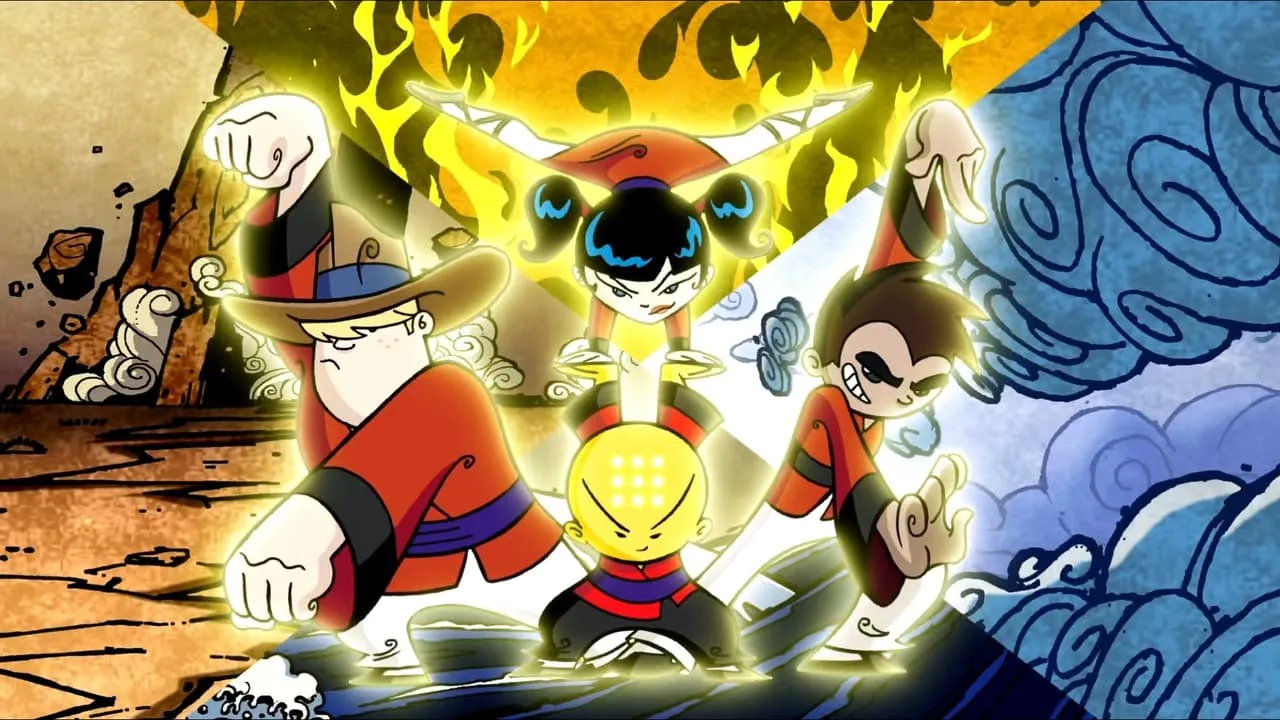
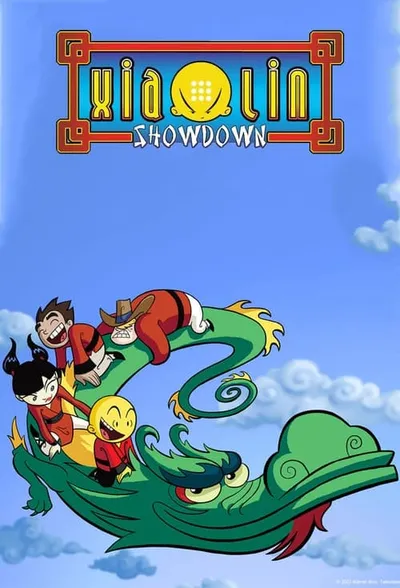
Xiaolin Showdown is an American animated television series that aired on Kids WB and was created by Christy Hui. Set in a world where martial arts battles and Eastern magic are commonplace, the series follows four young warriors in training that battle the forces of evil. They do this by protecting Shen Gong Wu from villains that would use them to conquer the world. Originally airing on the Kids' WB block of programming on WB Network in 2003, the series ran for 3 seasons and 52 episodes. Typical episodes revolve around a specific Shen Gong Wu being revealed which results in both sides racing to find it. Episodes usually reach a head when one good and one evil character must challenge each other to a magical duel called a Xiaolin Showdown for possession of the artifact. A sequel series titled Xiaolin Chronicles was previewed on August 26, 2013 on Disney XD. It began its long-term run on September 14 the same year.

Every episode at a glance, color-coded by rating. Rows are episode numbers within each season, columns are seasons.

The best and worst episodes at a glance. Use this to find must-watch episodes or ones you might want to skip.
In the season finale, an angry Raimundo turns to the dark side and joins forces with Wuya.
Omi is now aligned with Chase.The other young monks don't know what to think of this new friendship.Then they discover that the choice was not Omi's.By passing into the Ying Yang world, part of Omi was left behind--the good part.T...
Omi uses time travel to stop Hannibal before he can turn Chase to evil.But in doing so, he changes the course of history and turns the world upside down.When he returns to his time, Chase is on the side of good, but Master Monk Gu...
Omi increases his strength by growing larger after combining the effects of Shen Gong Wu.However, he discovers a downside when these effects appear to be irreversible.
Each point is an episode, plotted chronologically. The colored bands mark season boundaries. Look for upward or downward trends to see if quality improved or declined over time.
Vote count shows how many people cared enough to rate. High votes + high rating = beloved classic. High votes + low rating = notorious stinker. Low votes + high rating = hidden gem.
Episodes plotted by rating vs. vote count. The vertical line marks the rating threshold (7.5). More votes = more engagement. Toggle above to compare against global or show-specific median.
A simplified view: one point per season. This smooths out episode-to-episode noise to show the overall arc of the series.
Did each season build momentum or fizzle out? Green arrows mean the finale rated higher than the premiere. Red means the opposite. Longer arrows = bigger swings.
Some seasons are reliable bangers. Others are hit-or-miss. Each dot is an episode. Tightly clustered dots mean consistent quality. Scattered dots mean a mixed bag.
Each dot is an episode. Clustered dots = consistent quality. Scattered dots = variable season. Hover for episode details.